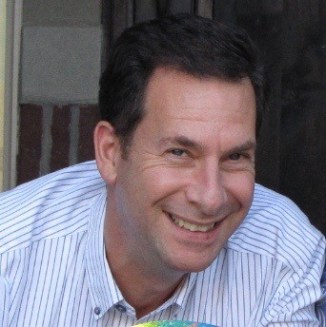
A Young Entrepreneur Cracks the Code of Healthcare Inefficiency

Everybody is talking about value-based care, says Chris Bradley, CEO of Mana Health, referring to the term for new paths to treat patients with more efficiency across healthcare systems.

The move to value-based care, payment for procedures a patient wants and needs, has been a focus for hospital systems as they move from a traditional fee-for-service models, a kind of payment that is extremely variable, and not based on quality. Procedures, such as imaging and screening, can have great variations of cost regardless of the kind of care, according to Dartmouth-Hitchcock.

But value-based care has little value if the technology isn’t working, the electronic health records are slowed, and the cost of integrating a system is nearly half million dollars, never mind that doctors and administrators aren’t happy about it, Bradley says.

Yet that’s where a lot of hospital systems and health centers find themselves.  “Let’s be honest, it’s not where it could be,” Bradley says. “The EMRs (electronic medical records) themselves, they are not as useful as people had hoped, and for interoperability, many haven’t seen them take off as they thought.”

Interoperability is the extent into which systems and devices exchange and interpret data.

The immense possibilities – and sometimes improbabilities – of healthcare is what got Bradley into this business. He is the founder and co-owner of New York City -based Mana Health, a technology provider that focuses on healthcare data access solutions, with the idea of making them faster, and more cost-effective.

The idea of Mana Health – which means ‘flowing energy’ – is to streamline data access, interoperability, and innovation. The analogy makes sense for Bradley, who has a neuroscience background, who grew up in a family of doctors and initially thought he’d go into medicine. Instead, he found he could help more people on the technology end of things.

“We want to crack the code of having a sustainable and scalable network.”

The company touts its innovative key data access programs, including those named ManaCloud, ManaCreate and ManaPortal.  ManaCreate works, in part, to reduce the usually  time-consuming function of bringing IT systems to market, and the company has a specific focus on application program interface (API), the protocols and tools to building software applications.


Bradley says there is a growing movement to standardize the way applications can access data, through API, which has been “notoriously absent in health IT until very recently” in an article he wrote for  MedCity News.

Integrating and launching an application on top of medical data can be a nightmare, and getting the data into the application and hosting that data in a HIPAA (The Health Insurance Portability and Accountability Act of 1996) compliant service is where things slow down and cost begins to spin out of control, Bradley says.

Although Mana Health is only a few years old, Bradley says it is growing its clientele, and has recently completed a program for an as yet undisclosed upstate New York hospital system that may save them upwards of $1 million. In one plan, Mana Health is working on proposals to develop a chat room for patients and families, where they can create data “and everyone knows what’s going on,” Bradley says.

Bradley puts it this way in a statement: “A cardiologist envisions treating patients faster with the right data points and providing targeted content. She is certain that with this experience she can improve outcomes.” So, where does she go from there? Bradley says.

“With ManaCreate and an efficient development team, she can expedite the design process, integrate all the right data and move into deployment mode faster for the betterment of healthcare,” Bradley adds.

“Data and interoperability and API, that is now a hot area,” he tells me.

Bradley says he recently attended a CEO roundtable, and the discussion was supposed to be about “value-based care, and that’s what they wanted to talk about. It delved into a conversation about interoperability. You cannot have value-based care without it.”

But when the CEOs talk about what they want, or the problems they face, often the topics revolve around data: it can be applications they want to deployed faster, saving millions from an EPIC investment, or improve tracking of patients with EMRs. “The one thing they have in common is the data” question, he says.

“That’s the highest value problem to solve,” he says of the data.

“Sometimes (healthcare leaders) don’t know they need to solve it until they go down that rabbit hole and realize, ‘Wait a second, I’m being asked to implement a variety of population health measures to integrate an (Accountable Care Organization), and I can’t because these systems don’t work with each other.’ Then you say you have an API, and you can launch an application in weeks instead of six months, they say ‘that’s interesting.”

“That,” he adds, “is how we get into it.”

Will the anti-depressant you take work? Researchers looking for clues: smiles included

As more Americans take antidepressants, the feeling is that the already large numbers may grow considerably in the stress-filled world we are in. Look how turbulent the past 12 days have been in light of the elections.

What if we can predict what antidepressants would work for some patients, or not, based on their childhood stresses, and brain activity, and studying their facial expressions, such as smiles?

That could mean a big difference, not only for patients, but for healthcare, and its spending on medications.

A team from Stanford University led a study to do that very thing; they “created a model, based on brain activity and exposure to stress in childhood, that predicts the likelihood that antidepressants will benefit a patient,” according to a recent National Institutes of Health Research Matters story Predicting the Usefulness of Antidepressants. The model has a80 percent accuracy for prediction of antidepressants helping patients.

“Addressing this question could provide a new mechanistic understanding of why some individuals respond to antidepressant treatments and others do not, as well as offer new targets for intervention,” the researchers said in the study.

The study findings indicate that many patients who faced stressful situations should be considered for other therapy techniques before medication.

Certainly, however, many people are now taking the meds.

In 2013, Roni Caryn Rabin of The New York Times wrote that the use of antidepressants skyrocketed, with one of 10 Americans taking antidepressant medications. Last November, Justin Karter reported in Mad in America that from 1999 to 2012, the percentage of Americans on antidepressants increased from 6.8% to 13%, citing the Journal of American Medical Association.

Not only are the numbers increasing, but a report in the Medical Daily show that most people take some type of anti-depressants, even though they don’t need it.

Finding the keys to antidepressants

As Tianna Hicklin, a writer at the NIH who wrote about the federal agency sponsored study, notes, antidepressant medications usually are linked to the treatment of depression, but done so as a result of a “trial and error” process.

So researchers looked into the mechanism of depression, examining patients’ stressors at childhood, and the brain’s handling of emotions. They reviewed  data from 70 patients who had  major depressive disorders, and asked them how many life stressors they had experienced before age 18, Hincklin wrote. Those stressors could include abuse, neglect, family conflict, illness, or death and natural disasters, she said.

In the meantime, the  researchers evaluated the amygdala activity of the brain linked to depression. Amygdala is a mass of gray matter inside each cerebral hemisphere. The researchers found that amygdala circuitry and early life stress (ELS) are both “strongly and independently implicated in the neurology of depression,” the team, led by Leanne Williams and Andrea-Golstein-Piekarski said. Williams did not respond to questions from Health Data Buzz.

Impact of Smiles

Using an MRI, the researchers measured brain activity in patients  and  viewed pictures of “emotional faces,” including smiling,  Hicklin wrote. Brain scans were taken before and after patients started taking antidepressants.

Ironically, antidepressants were less likely to work for those patients considered in the high -stress category, but “these patients had a greater chance of benefiting from the medications if their brains were highly responsive to happy facial expressions,” Hicklin added.

Also, patients with low childhood stress were most likely to benefit from antidepressant treatment. Their chances increased if their brains were less sensitive to both happy and fearful stimuli,” according to Hicklin.

“These results suggest that, for some patients, it might help to first try therapy techniques that address the impact of trauma in a person’s life before considering medication,” she wrote.


Cancer Moonshot: Shared Hope, Yet Still Not Enough Cooperation

President Nixon announced the war on cancer in 1971, in which we as a society are still slogging through, this immense battlefield. Vice President Biden, who ends his term in January, says one of his regrets is that he wouldn’t have been the commander-in-chief to preside over the “end of cancer, as we know it.”

He knows the heartbreak that cancer could cause, with the loss of his eldest son, Beau, who died at age 46 in 2015.

Of the VP’s vision to end cancer, he noted, “I said it, because I believe it’s possible.”

Is it?

There’s much to be happy about the progress we’ve made, as Biden said delivering the Cancer Moonshot task force report, a strategic plan to transform cancer research and care, to President Obama, since its work began in January.

Some of the areas of innovation and hope are wrapped around coordination and cooperation, the possibility  for penultimate team approaches.

There is still much to be concerned about, however: because there is still not enough coordination and cooperation, holes significant enough to stymie progress. Moreover, there may be questions ahead about research funding, because without the money, no matter how big the dreams, research will only go so far.

There is a $1 billion plan, but there are questions now with the GOP- led Congress and an incoming Donald J. Trump administration, and  how much money will actually be pumped into research, in which the new president-elect has not tipped his hand, or has shown conflicted interest.

Sharing Information

Let’s start with the question of sharing information to get us moving along the best path of the Cancer Moonshot. In science and elsewhere, it’s not easy. Biden notes there has been much progress, but there are still outstanding issues to be resolved.

The existing obstacles cited by Biden, in the words of the report:

  • Rapidly and effectively poor retention and recruitment in cancer clinical research trials
  • An antiquated culture of research and funding
  • Failure of sharing of medical records
  • Insufficient collaboration, (and) slow dissemination of cancer center knowledge.

What Biden Sees Ahead

Biden said he was convinced that the obstacles are not insurmountable.

The vice president didn’t want to dwell on the pitfalls. He noted the tremendous progress that has been made in bringing together some teams in research. Inevitably, the idea is to have more people understand the impact of the data and help them control their own healthcare.

Five years ago, oncologists weren’t routinely working closely with immunologists, virologists, genetics, chemical engineers and others – now they are, Biden said.

It’s different today. There are at least 70 commitments of partnerships, public and private, under Cancer Moonshot. Among them: the National Cancer Institute, Amazon Web Services and Microsoft are announcing a collaboration to build a sustainable model for maintaining cancer genomic data in the cloud. In addition, the Department of Defense  is establishing a groundbreaking new study to transform an  understanding of the biological basis of cancer. The administration says researchers will have at their fingertips potentially 250,000 samples to uncover new connections between the earliest signs of cancer.

The Money Issue

What’s ahead next year is uncertain as the GOP swept the House and Senate as well as the White House. Some analysts believe that Trump isn’t inclined to be a large booster of research programs in science, but the verdict as of yet is pretty unclear.r

Some analysts believe that President-elect Trump is not inclined to be a large booster of research programs in science, while others do not. It’s a mixed forecast, according to the Verge.  The media outlet noted that Trump had told a conservative radio host the NIH was “terrible” but told  Scientific American “we must make the commitment to invest in science, engineering, healthcare and other areas that will make the lives of Americans better, safer and more prosperous.”

When the Obama administration launched the National Cancer Moonshot program, officials described it as a $1 billion initiative to provide funding for researchers to speed up development of new cancer detection and treatments the White House said. The initiative would begin immediately with $195 million slated for new cancer initiatives at the National Institutes of Health (NIH) in fiscal year 2016.

Recently, the American Association for Cancer Research has asked Congress in its “lame duck” session to support a $2 billion increase for the National Institutes of Health in a fiscal year 2017 appropriations bill. That includes $216 million for the National Cancer Institute.

The AACR  calls for “alternative funding stream for targeted multi-year initiatives” such as the National Cancer Moonshot Initiatives, and other programs.

Nearly everyone involved, as one official told me, “has their fingers crossed.”

“The mission of this Cancer Moonshot is not to start another war on cancer, but to win the one President Nixon declared in 1971,” Biden said.

To do so, the battles must be consistently – and cooperatively – fought.


Progress Against Tobacco Use. Yes. But…36 Million Smokers…Still

Lots of people are quitting cigarette smoking, current federal data  released  yesterday show, but there is a lot more to do to crash that fogged-up window of nasty tobacco use, with an uneven effort seen in too many states to enact tobacco prevention or control programs. Indeed, there are still 36 million smokers in this country, according to the Centers for Disease Control and Prevention.

“Sadly, nearly half (of the people) could die prematurely from tobacco-related illnesses, including 6 million from cancer, unless we implement the programs that will help smokers quit,” said CDC Director Tom Frieden in a statement.

Forty percent of cancers diagnosed in the U.S. may have a link to tobacco use, according to the CDC’s Vital Signs report.

Tobacco use is the leading preventable cause of cancer and cancer deaths. Each year, between 2009 and 2013, about 660,000 people in the U.S. were diagnosed with, and about 343,000 people died, from a type of cancer-related to tobacco use, according to the  CDC. Three in 10 cancer deaths are linked to cigarette smoking, but since 1990 about 1.3 million tobacco-related cancer deaths have been avoided, the agency said.

“When states invest in comprehensive cancer control programs – including tobacco control – we see greater benefits for everyone and fewer deaths from tobacco-related cancers,” said Lisa C. Richardson, director of CDC’s division of cancer prevention and control.

“We have made progress, but our work is not done,” Richardson said.

There has been progress indeed. Cigarette smoking among U.S. adults declined from 29.0 % (45.1 million) in 2005 to 15.1% (36.5 million) in 2015.

During 2014-2015 alone, there was a 1.7 percentage point decline, resulting in the lowest prevalence of adult cigarette smoking since the CDC’s National Health Interview Survey began collecting data in 1965.

The CDC has touted “comprehensive cancer control programs” that the agency says “focuses on reducing cancer risk, detecting cancer early and improving cancer treatments.” That helps more people survive cancer, or improve survivors’ quality of life.

But “not all states or all people have experienced the benefits of these efforts,” the CDC says, noting: “tobacco prevention and control resources, along with access to medical care and cancer treatment, vary widely across the U.S.”

The incidence and death rates were highest:

  • Among African-Americans compared with other races or ethnicities
  • People who live in counties with a low proportion of college graduates
  • People who live in counties with high poverty levels.

Tobacco use was highest in the Northeast (202 per 100,000 people) and lowest in the West, (17 per 100,000 people). Tobacco-related  cancers were higher among men (250 per 100,000 people) =then women (148 per 100,000 people).

It’s time for states, counties and local communities to help our neighbors stop smoking. Smokers can get free help by calling 1-800-QUIT-NOW. You can also get additional  resources from the CDC on the internet.


Sanders Burned Up In a Big Way Over Big Pharma: Will Trump Join the Fray?

Sen.  Bernie Sanders was torching the  Twitter lines in a big way over being fed up with pharmaceutical  price hikes, especially over the past month or so. Once the debris is cleared over the Democratic mess following Donald Trump’s surprise victory, Sanders is likely to raise the heat,  I’m sure. Will Trump join in?

Yes,  Sanders  has been on a rampage, decrying drug costs and Big Pharma, but there’s been more than talk: he’s also been seeking investigations into reasons behind some of these price hikes, such as the cost for insulin medication Humalog, which has  increased nearly 700% since 1996 (adjusted for inflation).  Last week, for instance, the Vermont Senator and Rep. Elijah Cummings of Maryland sent a letter to the Justice Department and the Federal Trade Commission to “investigate potential collusion among pharmaceutical companies that manufacture diabetes products.”

“Why has the price of Humalog insulin gone up 700% in 20 years,” Sanders said on Twitter. “It’s simple. The drug industry’s greed.”

In another tweet on drug pricing, he wrote: “The business model of the drug industry is a fraud.”

And another, “9 out of 10 Americans blame the pharmaceutical industry for the high cost of healthcare,” Sanders said.  “It’s time to end their greed and lower drug prices.”

How does the Sanders drum-beating sound to Trump? Trump hasn’t been shy about the pharmaceutical industry, but has not specifically complained about specific companies for over-pricing.  In a STAT article  “Say what you will about Donald Trump. He’s right about drug companies,” a Trump supporter physician said that Trump was “honestly and forthrightly calling Big Pharma on its Big Baloney.”

But John LaMattina in Forbes noted he wouldn’t be surprised to see legislation that allows Medicare to negotiate drug prices, but  “if anything the group NOT likely to support such legislation would be Republicans and not Democrats.”

When it comes to drug prices, Sanders is all over it.  He’s referred to news articles and reports about outrageous drug prices, and he’s jumped on them, including a comparison of U.S. drug costs and those in Europe.

“It makes no sense that the same drug that costs $70 in France  costs $450 in the U.S.,” he said. “We should reduce barriers to importation of drugs.”  Trump also has discussed allower less expensive drugs made abroad to be sold in the U.S.

“Americans shouldn’t pay higher prices than Canadians for the same drugs simply because Congress is bought by the pharmaceutical industry,” he said.

In August, Sanders also  blasted the pharmaceutical company Mylan, referring to its generic EpiPen that costs three times more than it cost in 2007.  He also stepped that argument  last month when Reuters reported that EpiPen price increases added millions of dollars to Pentagon expenses.

“The greed of Mylan and the entire pharmaceutical industry is out of control.”


Trump: Ditch Obamacare on Day One. Will He?

whitehousephoto

Donald Trump’s stunning victory early this morning as the 45th president of the U.S., coupled with the GOP takeover of the Senate and House, could mean trouble – or the end – of Obamacare.

Just ask President-elect Trump.

Trump said  Hillary Clinton called to concede, and that he  wanted to “bind the wounds of division.”  There may be many division ahead, not the least of which what may happen with Obamacare. Trump didn’t mention it but remember: “On day one of the Trump Administration, we will ask Congress to deliver a full repeal of Obamacare,” Trump says on his campaign website.

In the weeks before last night’s election, in which everything from FBI miscues to miscalculations by pundits was highlighted, Obamacare also played a role when it was announced recently some premiums would be increased by 25%.

While the defeated Hillary Clinton was ready to continue Obamacare, or the Affordable Care Act, Trump has been defiant anytime he discussed it.

“As it appears Obamacare is certain to collapse of its own weight, the damage done by the Democrats and President Obama, and abetted by the Supreme Court will be difficult to repair unless the next President and a Republican Congress lead the effort to bring much –needed free market reforms to the healthcare industry,” Trump said on his website.

“It is not enough to simply repeal this terrible legislation,” he said. “We will work with Congress to make sure we have a series of reforms ready for implementation that follow free market principles and that will restore economic freedom and certainty to everyone in this country.”

While Trump continually has pounded on the campaign trail about Obamacare, he specifically lambasted the administration for increased Obamacare premiums.

“On November 1, just before the election on November 8, new numbers are coming out which will show 40, 50, 60% increases,” CNN quoted Trump saying at a September 16 campaign rally in Miami. “They want to delay it until after the election because it’s … a disaster.”

As USA Today reported in October as federal exchange opened up, premiums would be increased 25% for plans for which the tax subsidies are calculated.


Surprise! Growth Rate of Employer Healthcare Costs Continues to Slowdown — Analysis by Margaret Dick Tocknell

It may be hard to believe but the growth in employer healthcare costs is at a 10-year low. PwC’s annual report  on medical cost trends— including physician, pharma, hospital, and outpatient costs—-projects that healthcare costs in 2017 will increase by 6.5%. That’s down from 11.9% in 2007 when cost increases began a steady decline interrupted only by a slight increase from 2014 (6.5%) to 2015 (6.8%).

The medical cost trend is important to employers and consumers because it influences the cost of health insurance premiums. And no, this decline doesn’t mean that insurance premiums will be lower anytime soon. That 6.5% is still a bit higher than the annual inflation rate so there’s still plenty of work to be done.

In this election year, both candidates have promised to reduce healthcare costs, but as the PwC report points out reducing those costs is complicated work, which has to account for not only the price paid for— but also the utilization of — medical products and services.

“Future reductions in medical cost trend growth will require a continued focus on prices but also delivery and access changes that might impact utilization,” says the report. The analysis, based on health industry interviews and surveys, measures medical spending growth for the 155 million people insured by employer-sponsored plans.

So what is pushing cost upward?

Convenience is a cost inflator. Just a few years ago the healthcare industry was excited by the arrival in big box stores of small retail clinics. With lower costs and convenient locations they can provide an alternative to costly ER (emergency room) visits. In 2011 there were fewer than 1,500 retail clinics nationwide and about 24% of consumers reported visiting one. It’s projected that by the end of 2016 there will be 3,000 retail health clinics and about 40% of consumers will have sought care at one.

So what’s the problem? Well, it’s sort of a damned if you do; damned if you don’t scenario. There’s evidence that the threshold for seeking care at a retail clinic is lower. A sniffle or a sprain may not justify a trip to the ER but a quick stop at a retail clinic is acceptable. So for now this convenience is contributing to increased costs.

But change is brewing and retail clinics may help reduce overall spending in the future. These clinics are already moving into chronic disease management, especially for diabetes and asthma, explains Rick Judy, a principal in PwC’s Health Research Institute, in an e-mail exchange. That’s a step physicians are welcoming with open arms with 75% of primary care docs saying they want retail pharmacists to assist with medication management.

Pent up demand is a cost inflator. For years mental health was something of a step-child to physical health in the health insurance industry with complicated rules for access and more frequent denials for mental health care than for general medical care. But according to the PwC report, employer recognition that mental health is closely related to physical health (68% of people with mental health issues have chronic health conditions such as diabetes and heart disease) and a new regulatory push to enforce mental health parity legislation is expected to change that.

In the short-term, pent-up demand for mental health services could inflate medical costs and push the medical cost trend upwards. Over the long term though mental health treatment could help reduce costs associated with physical health issues, according to the report.

Meanwhile, high performing networks and new pharmacy benefit management (PBM) strategies are putting downward pressure on healthcare costs, says the report.

The high performance network is a deflator. For years cost sharing was the go-to strategy for employers looking to reduce their healthcare expenses. So employees paid a larger share of healthcare premiums and often found themselves on the hook for higher and higher deductibles and copayments. But now it looks like cost sharing has plateaued and employers are looking for other ways to control costs.

A typical high performance network includes a local or regional community of providers with proven, high-quality care delivery, an efficient cost structure, and the willingness to be paid on outcomes, says Judy.

The narrow networks can reduce employer costs by as much as 35% compared with broader, more inclusive provider networks. Although only 9% of employers have implemented a performance-based network, there is strong interest with 43% of employers considering their adoption, according to the PwC report. One caveat: Employers may need to devote resources to educate their staff about the trade-offs between large all-inclusive networks and cost savings.

PBM is a deflator. Aggressive negotiations, increased competition and a move toward paying for results — not volume discounts—may create a perfect storm that will help hold down drug prices. PBMs are aggressively negotiating drug costs as employers signal their willingness to provide narrow formularies to their employees. Employers are more likely to get the best prices if they are willing to narrow their formularies to a single treatment option.

Meanwhile, increased competition and a lack of a new blockbuster specialty drug coming on market in 2017 will mean more rebates and pricing discounts.

“Many of the new prescription drugs coming on market…are arriving close to the same time as competitors’ drugs…[making] it easier to negotiate more attractive discounts,” says the report.

Judy notes that the FDA is beginning to approve biosimilar drugs, which are less expensive alternatives to the high-cost specialty drugs. “Our research found discounts as high as 40% once a follow-on drug is approved for market. Costs go down even further when the patents expire and generic versions compete with branded drugs.”

About the author: Margaret Dick Tocknell specializes in business-to-buiness healthcare reporting, white papers, and the analysis of trends affecting stakeholders in the delivery of healthcare services. She is based in Jacksonville, Fla.

Cry Uncle, Trump! Cry Uncle!

Steady Hillary Clinton and unbridled  Donald Trump headed into the final stretch of campaigning before the election with last night’s third  debate. Clinton, the cadence of years of politics and experience behind her, versus the bombast of Trump, this outsider of political outsiders on a treadmill going backward, one “nasty” word at a time.

The debate again put healthcare on a low-rung, possibly because Clinton and Trump’s differences have been so well documented, such as Trump’s disdain for Obamacare, and Clinton’s favorable view of it. We’ll get to some of the specifics in a bit.

The big news out of the debate focused on Trump refusing to promise he would concede if he lost, with the statements described as unprecedented, an insult to democracy, a hint that his followers may never give in.

But, on the other hand, if he  loses, he’s outta here, and what difference does it make? When a team loses the championship, they pack their bags, say goodbye, and the planes fly them home. Season over. There’s a lot of we could-a-should-a, brow-beating, and second-guessing over missed chances. But that’s it. If Trump loses, we’ll be saying Happy New Year at the advent of 2017, and the GOP could begin or continue a massive re-examination. Yeah, the worry is Trump will keep saying the system is rigged, yeah, yeah, yeah, without a teardrop of evidence.

America is great still, despite whiners.

The debate and healthcare

When it comes to healthcare, in the final debate, Trump and Clinton sharply disagreed about Obamacare, potential Supreme Court choices in light of Roe Vs. Wade, and the work of the Clinton Foundation.

According to the transcript prepared by Politico

Obamacare

“One thing we have to do is repeal and replace the disaster known as Obamacare,” said Trump. “It’s destroying our country. It’s destroying our businesses.”

“It is probably going to die of its own weight, but Obamacare has to go,” Trump said. “The premiums are going up 60%, 70%, 80%. Next year, they’re going to go up over 100%. And I’m really glad that the premiums have started, at least the people see what’s happening because she wants to keep Obamacare and she wants to make it even worse and it can’t get any worse.”

Clinton strongly disagreed. “And I’ll say something about the Affordable Care Act, which he wants to repeal,” she said. “The affordable care act extended the solvency of the medicare trust fund. If he repeals it, our Medicare problem gets worse.”

Trump told Clinton:  “Your husband disagrees with you,” obviously referring to former President Clinton’s remarks about Obamacare as ” craziest” thing.

Clinton elaborated, however:  “We’ve got to go after the long-term health care drivers. We’ve got to get costs down, increase value, emphasize wellness. I have a plan for doing that, and I think that we will be able to get entitlement spending under control but with more resources and smart decisions.”

The Supreme Court

Trump emphasized that he would, if elected, be “putting  pro-life justices on the court.”  “It will go back to the states and the states will then make a determination.” He said he’s  aiming (to nominate)  two or perhaps three justices on the court.”

Clinton emphasized her support for Roe v. Wade. “We need a Supreme Court that will stand up on behalf of women’s rights strongly support Roe v. Wade, which guarantees a “constitutional right to a woman to make the most intimate, most difficult in many cases, decisions about her health care that one can imagine,” she said.” I will defend planned parenthood.

Clinton said the government shouldn’t be “stepping in and making those personal decisions,” referring to a question about her stance related to government intervention of  late-term partial birth abortions. “So you can regulate if you are doing so with the life and the health of the mother taken into account,” she said.

“Well, I think it’s terrible,” Trump said. “If you go with what Hillary is saying, in the ninth month you can take baby and rip the baby out of the womb of the mother just prior to the birth of the baby.”

Clinton Foundation

Clinton said the foundation “made it possible for 11 million people around the world with HIV-AIDS to afford treatment and that’s about half of all the people in the world that are getting treatment in partnership with the American health association.”

Said Trump: “It’s a criminal enterprise.”  He added, “So I’d like to ask you right now why don’t you give back the money that you’ve taken from certain countries that treat certain groups of people so horribly?

STOP HACKERS IN THEIR TRACKS

The news that as many as 500 million user accounts were hacked on Yahoo came roughly when I was typing..er…an email in my Yahoo account.

And I was just writing a story about the problems of hacking into healthcare organizations.

Yahoo may have been subjected to the worst data breach in history.

“The Yahoo hack is HUGE,” says Phil Richards, chief information officer for LANDESK, based in South Jordan, Utah. The impact of that could be staggering.” LANDESK provides IT systems, security service and process management solutions for organizations worldwide.

The FBI is trying to untangle the Yahoo situation, while Congress may investigate, too.

While the Yahoo hack is multifaceted, Richards says there is an immediate lesson for those working in healthcare and a relatively simple one: watch out for re-used passwords, especially among patients.

“Many healthcare systems allow patients to log in to get a copy of their medical records, such as test or lab results, diagnosis reports, or prescriptions,” he says. “Humans, being somewhat predictable, often issue their credentials across multiple systems. If people used the same credential (user id and password) at a healthcare website, as they did for Yahoo, those credentials could be exposed.”

If you run a small hospital system or a doctor’s office, there are other concerns, too, such as hackers going into computer networks, or demanding money from you to get rid of the infections, twists of ransomware.

philrichards_landesk-1

Phil Richards, an expert on computer security and chief information officer for LANDESK, based in South Jordan, Utah. LANDESK provides IT systems, security service and process management solutions for organizations worldwide.

Ransomware is the fastest growing malware threat, targeting users of all types – from the home user to the corporate network. Obviously, healthcare isn’t the only target of hackers. Hackers implementing ransomware can pinpoint home users, business and government networks.

On average, more than 4,000 ransomware attacks have occurred daily since January 1, 2016. – That’s a 300 percent increase over the about 1,000 attacks per day seen in 2015, according to the United States Computer Emergency Readiness Team. Healthcare accounts for 88 percent of all detections in the second quarter of 2016, according to managed security provider Solutionary, says a report in Betanews.

.In May, the Kansas Heart Hospital, in Wichita, KS, paid an undisclosed ransom after it was hacked. Once that occurred, officials there might have figured that was the end of it, a headache no longer to be suffered.

It wasn’t. The hospital was targeted a second time by a hacker. The hospital learned a lesson and said “no” the second time to the idea of paying a ransom.

“The police of Kansas Heart Hospital in conjunction with our consultants felt no longer was this was a wise maneuver or strategy,” the hospital said.

Richards says in his blog professionals dread the day when they get a call, like what happened at Kansas Heart Hospital, that someone seeking ransomware has infiltrated a network and already “started encrypting files, drives, and network shares.”

“The hackers are seeing continued profit in ransomware, and with more severity and frequency,” Richards says. “We’re seeing the healthcare being attacked successfully across the board.”

Medical records of smaller hospitals are particularly vulnerable especially with a lack of infrastructure to protect them. (Richards emphasizes that he was referring to generic healthcare providers, not specific cases, such as Kansas Heart Hospital, in which he is unaware of its infrastructure.)

“The nirvana would be to remove all profit potential from ransomware. That is likely not realistic, however,” Richards says.

The federal government and non-governmental organizations are strongly recommending against paying a ransom. Richards agrees and offers these observations:

  • There is a possibility that you will not get the files back even after you pay.
  • A perception may exist that you are ‘giving in’ to the bandits
  •    “Bad actors” are encouraged to continue developing ransomware.
  • A market perception may exist that your company doesn’t know how to handle security incidents.

Overcoming Vulnerabilities

In the security world, people are uncertain, worried and anxious what to do next

Ransomware can come about in some of the seemingly most innocuous ways. For instance, a physician may like what seems to be cool software he learned about at a conference and spread the word at his hospital or practice. Once the software is installed, it may only pack trouble and be a place for ransomware. Or a hospital doesn’t its system as often as it should.

Many ransomware “ (operatives) are well organized to quasi-organized, and most of the time not on U.S. soil, but from Russia,” Richards says.

Overcome Vulnerabilities

Nothing is perfect, but you can take big steps to reduce the possibility of vulnerabilities in a system that can’t stand a specific attack, he writes. “The best way to protect your system is to make sure that the malware can’t get a foothold, and analyze your computer to find vulnerabilities,” Richards says. A great tool to improve awareness has been established by an inter-agency government task force that offers technical guidance protective measures against ransomware.

   Do you have a weak password?

   A computer in a public place that hasn’t been locked

   An application that hasn’t been patched. Defects in software that require patching, he said, are tracked in the National Vulnerability Database.

A glaring example how vulnerabilities are exploited, he says, is by examining the behavior of Exploit kits. Exploit kits are the second most common way for malicious actors to gain a foothold within an organization, just behind phishing.

Exploit kits are sold on the cybercrime black market to gain control of unsuspecting consumers, Richards says.

The hacking can start when an employee in your organization goes to a website.

Recently, Richards mentioned in his blog a new threat: Betabot, a highly sophisticated piece of ransomware that has the ability to circumvent most of the technology devised to detect it. “The net effect is that the malware will skate through the perimeter defenses and infect the workstations within your network without being detected,” he says.

Ultimately, for hospital systems and physician practices, they must protect their health records. “This is part of treating patients,” Richards says, “and the priority is to secure the records.”