Doctors’ Orders: Deny GOP Healthcare Reform Plan – 10 Million Would Lose Coverage

The American Medical Association today  blasted the GOP’s healthcare reform plan, saying it would cause “many Americans to lose the health care coverage they have come to depend upon.”
The AMA pointed out that as many as 10 million people could lose coverage, adding that 2 to 4 million “could lose the insurance they purchased in the individual health exchanges” under Obamacare.  In addition, 4 million to 6 million could lose Medicaid coverage, the AMA said.

The powerful physicians group referred to a S&P Global Ratings estimate that as many as 10 million Americans could lose coverage under the GOP plan. It was figured out this way: About 2 million and 4 million people might lose the insurance they purchased in the individual health exchanges under Obamacare. And another 4 million and 6 million could lose their coverage under Medicaid.

The proposal to replace Obamacare “would reverse the coverage gains achieved under the (Affordable Care Act),” the AMA said in a statement today.

The Republicans’ plan “as introduced, it does not align with the health reform objectives that the AMA set forth in January to protect patients,” the AMA said. “While the ACA is imperfect, the current version of the AHCA is not legislation we can support.”

“The replacement bill, as written, would reverse the coverage gains achieved under the ACA,” the powerful physicians’ group said.

The AMA sent a letter to House committees beginning today reviewing the plan, said the organization’s CEO and Executive Vice President James L. Madara, MD.  The plan “just won’t do,” he said.


— Joe Cantlupe

The 20 Million People Question

President Trump often talks about what a disaster Obamacare is. This is a healthcare blog that cites “data” – the one thing usually missing from his speeches. Numbers. Or numbers in context. Numbers with details.

On most any topic, Trump usually talks from his gut — visceral comments, “fantastic” “terrible” or, yes, a “disaster.” But as President, you gotta ditch the gut hyperbole.  As Trump speaks to Congress tonight, he is likely  stray not far from the script: and  talk numbers around proposed budget cuts (the environment, anyone?), or increases, (the military), or even some reflection of stability (Medicare and Social Security).  Will he lay out enough data  for Americans to figure out his healthcare plan as he vows to overhaul Obamacare?

Just recently, Trump added a new word to his lexicon: healthcare reform is “complicated.” Unspoken: lots of numbers. Sen. Bernie Sanders almost gagged.

Trump may or may not spout detailed figures tonight when he discusses healthcare reform, but the most important  one is this: 20 million more people have health insurance as a result of Obamacare.

As the AMA (American Medical Association) Wire’s Kevin B. O’Reilly  wrote: “For America’s physicians, 20.4 million is not just an abstract figure. It represents their patients—living with illness or working to prevent it—who now have health insurance coverage to support their care.”

“And as the nation’s elected representatives consider changes to the health system, it is a number no one wants to see go in the wrong direction,” he added.

What direction will we go in healthcare?

Recently, Rick Pollack, president and CEO of the American Hospital Association and Marilyn Tavenner, president and CEO of America’s Health Insurance Plans, focused on the same question at a Nashville Health Care Council panel discussion. That talk had one major topic: Medicaid.

A “proposal to transition Medicaid funding to block grants, was a recurring theme throughout the discussion,” the council said in a statement.  

“So much of this is yet to be defined,” Pollack was quoted as saying. “Our concern continues to be making sure patients have coverage. We support giving flexibility to the states, but our fear is that block grants or per capita caps could be a vehicle that further constrains a program that is already severely underfunded.”

Even with Obamacare and its resulting 20 million more people having access to healthcare, the AMA Wire’s O’Reilly wrote that there are still problems if the existing law stays the way it has been. For one thing, there is a need to “stabilize  the individual insurance market and improve choices and options for patients,” he wrote.

Among the problems, O’Reilly added: “Many families are not eligible to get premium and cost-sharing subsidies to purchase coverage on the ACA exchanges because of a so-called ‘family glitch’ where a father or mother is only offered employer coverage as individual and not for the family,” he said. Then,  the family is not then eligible for coverage through an ACA exchange,” O’Reilly wrote.

This “family glitch” has affected an estimated 10.5 million adults and children, according to HHS, O’Reilly wrote.

Millions of people. Will the President talk numbers? More numbers, more question marks.

— Joe Cantlupe


Winning Awards, Working Through Illness and Pain, (Bureaucracy) too.

In one of the earlier blog posts, I wrote about how Graham Baldwin, a 49-year-old environmental building and development inspector in Maryland, kept working despite his pain and his battle with head and neck cancer.

He goes to work. The pain intensifies. He goes to work. It gets worse. He works more.

And wins an award? Yes. Baldwin was recently named an award winner for his work. I’ve seen the award, the “highest award, distinguished service” from the county where he is employed.

Despite his illness, sources say he is well-respected by his peers and also is tough-as-nails when necessary to ensure the job gets done. He doesn’t like the idea people around him get a hint of his sickness, the awful feeling of weakness, the bleeding, and nausea. He works odd hours to get the job done, or not be seen as much.

Baldwin’s illness is rare. Head and neck cancers account for about only 3 percent of all cancers in the U.S. These cancers are nearly twice as common among men as they are among women.

And Baldwin is a rare guy: How many people who are wracked with pain also rack up awards – for their continued hard work? Defying the odds, Graham Baldwin has been battling cancer for several years and seeing the costs of care skyrocket. (See related story on this page, “Having a Rare 3 Percent of Cancers, Graham Baldwin Needs Your Help”).

In 2006, soon after his wife’s death, Graham was diagnosed with benign tumors in his head and throat. For the next several years, he was treated by an ENT and underwent 5 surgeries to remove tumors. Around 2011, he noticed a lump in his neck and then was diagnosed.

He keeps going to work, despite intense pain. It’s almost Un-American: According to the Journal of the American Medical Association, employers in the U.S. lose over $60 billion a year due to workers who are not meeting their full potential due to pain and pain-related issues.

Graham has been confronting a maze of bills and insurance issues for more than a decade, struggling to learn what procedures to get next, what surgeries may be delayed because of lack of money. Post-cancer treatment infections in his jaw have become more dangerous and now deadly, with every postponement of surgeries and treatments he desperately needs to go forward.

Yes. You read that correctly. Surgeries delayed because of the lack of payment.

It’s ironic, here we are in a political maelstrom over Obamacare, with Republicans intent on erasing it, and town halls filled with people saying they desperately need their insurance coverage, worried about pre-existing conditions, or wondering how young people in their families are going to be insured.

Amidst those fights, there are the real struggles, for someone like Graham, who has insurance but it’s not enough. Insurance. But not enough. A contradiction in terms, no? People like Graham seek and deserve a chance to keep fighting.

Even under the Affordable Care Act (Obamacare) – the idea being that there will be healthcare for millions more (and there has) –  the struggle for adequate insurance payment for needy patients continues. In January 2016, the American Journal of Medicine blog noted a New York Times story that found “insurance often fails as a safety net.”

“Health plans often require hundreds or thousands of dollars in out-of-pocket payments, sums that can create a cascade of financial troubles,” especially for those living from paycheck to paycheck, Times writer Margot Sanger-Katz wrote.

Sanger-Katz came up with a solution, of sorts.

“Here is the surest way to enjoy the peace of mind that comes with having health insurance: Don’t get sick,” Sanger-Katz wrote.

For now, Graham Baldwin doesn’t have that luxury.

(Graham and his family have many friends, who are trying to raise money for his care at this crucial time. Graham established a gofundme page, which friends have supported.)

Joe Cantlupe

America in the Opioid Tailspin

Part One

Many factors — some well-known, some not — have contributed to America being in the tailspin it is in today with the national epidemic of opioid and heroin abuse, says a top toxicology expert.

Over-treating pain. The explosive marketing of profit-surging pharmaceuticals. Uneven regulations.

And there are underlying reasons, too: physicians worrying about patient-satisfaction scores. And the elevation of pain as a “fifth vital sign.”

Everyone is talking about the misuse of the drugs, how we got off-kilter in trying to balance treatment of severe and chronic pain with powerful and addictive drugs, resulting in too many overdoses and deaths. There is much blame to go around.

“The lesson is the danger of unintended consequences,” says Leslie R. Dye, MD, FACMT, Editor-in-Chief, Point of Care Content for Elsevier and president of the Medical Toxicology Foundation Dye also is the immediate past president of the American College of Medical Toxicology.

“Well- meaning people, medical and non-medical, develop regulations and perverse incentives that have repercussions. We over aggressively treat pain as mandated and addiction increases,” Dye adds. “We change our prescribing habits, as mandated, and give fewer prescriptions for opioids, and addicts then turn to heroin.”

In a powerful webcast in November, Dye told the story of “Opioids: the Next Death Penalty,” about the evolving problems of opioid abuse, its overwhelming challenges, and hopes for the future. From the 1950s to today, she told how the “pendulum has swung” about the debate of how many opioids should be prescribed: that it was OK, not OK, and back and forth, until where we are now: definitely not OK. In between, there has been intense marketing, sales promotions, questionable governmental and physician practices relating to the dispensing of the drugs.

Opioid-involved deaths have continued to increase in the U.S – and in a shocking way. Overdose deaths have quadrupled since 1999, according to the  Centers for Disease Control and Prevention.
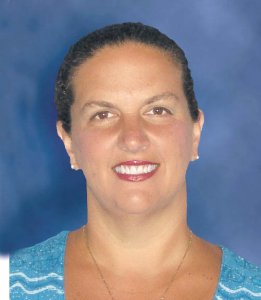
368_1058619867112_8762_n1 Leslie R. Dye

Misguided policies

Who would think some insider-baseball designations, such as “patient satisfaction” scores and a term as a “fifth vital sign” would have an impact on opioid use, and possibly misuse? It appears they have. “All these things created a snowball effect,” Dye says.

Over the years, some patients, particularly those having potential addiction issues, demanded opioids, and physicians too often relented, she said. Dye knows first hand of patients asking for drugs. During a period she was working several shifts in the emergency department at a hospital in rural Ohio, many patients asked her for more opioids. Her answer to their requests – and sometimes demands – was “no.”

“I would take the time and talk to them, and tell them why I wasn’t going to give them the prescription,” Dye recalls. “Ninety-five percent of the time they stormed out angry,” she said.

Then, Dye checked with her physician colleagues, many who were prescribing the number of opioids patients sought. “I asked them, ‘what’s the deal?” Dye recalls of her conversations with fellow doctors. “Many of these physicians were overworked – working 12 to 14-hour shifts, working five days in a row in overcrowded emergency departments,” she said. For them, it “wasn’t practical for them to take the time and not give (the patients) the medication,” Dye says.

And there was something else: “They were getting part of their bonuses based on patient satisfaction scores,” she says.

Patient satisfaction scores could have an impact on funding for healthcare systems. The better the score, the more money they get. The patient satisfaction scores could be dependent on anything such as the bedside manner of the physician, and whether the patient would recommend the facility to someone else. It was then not unusual for a physician to relent on a demanding patient – even if they wanted more medications.

“Yes, healthcare is a business, but our customers, the patients, don’t always know what is best for them,” she says. “It is my belief that giving incentives for patient satisfaction encourages many problems – not only unnecessary prescriptions for pain medicine and antibiotics but for ordering unnecessary tests.”

When Dye refers to the “fifth vital sign,” she refers to emphasizing pain as significant as blood pressure, for instance, which has resulted in many repercussions, including over medication, experts say.

The “fifth vital sign” was initiated by the Joint Commission for its Pain Management Standards in 2001, according to.MedPage Today. It required that healthcare providers ask every patient about their pain, on the theory at the time that pain was undertreated, the online magazine said.

“We were told, physicians and nurses, we should consider the pain scale as important as if it was blood pressure or pulse,” Dye said. “If their level of pain was zero to 10 (10 being the worst pain of your life),” she indicated it was recommended that the patient should be medicated to reduce the pain. There was a problem, though: “It wasn’t long before we saw patients eating chips and talking on their cell phone and reporting pain levels of 10,” she says. “Pain is very subjective, it’s hard to determine, but this pain scale; I think few people ended up using it.”

Quite typically, the debate has raged over the pain scale, but not resolved – for years.

In 2007, a  paper from the Journal of the American College of Surgeons said it all in its title: “Kindness kills: the negative impact of pain as the fifth vital sign.” The authors wrote: “The current emphasis on pain assessment as the fifth vital sign and the use of unscientific pain scales is causing serious injury and death from overmedication.”

The American Medical Association last year adopted a resolution recommending removal of pain as the “fifth vital sign,” because of overprescribing, according to Modern Healthcare

Pendulum Swinging Back and Forth

In 1980, a pivotal moment that advanced opioids came, in part, as a result of an academic letter published in the  New England Journal of Medicine, Dye says. “We conclude that despite widespread use of narcotic drugs in hospitals, the development of addiction is rare in medical patients with no history of addiction,” said the Jan. 10, 1980 piece in the New England Journal of Medicine.

“If you look at this letter, it says, ‘if the patient is not an addict, you are fine,’ and that may be a simplistic way of looking at it, but it really changed the way we looked at addiction,” she says. When I asked her further about it, Dye says: “The most important thing is that it was a letter to the editor about a study and not a formal peer-reviewed study. It does tell me that we really need to evaluate the literature before we change our beliefs and practices.”

During that period, “people were starting to treat pain more aggressively. Prescriptions for pain were much more easily attainable,” she says.

Then, there evolved the “pill mills” – when a physician’s office might be right next door to a pharmacy, and they were selling lots of opioid medications, Dye says. “Physicians were making lots of money just by patients requesting pain medication and filling out the prescriptions,” she says. For some patients desperate for the drugs, they didn’t care how far they had to go to obtain them. Dye recalls a patient who drove from rural Ohio to Florida for her supply of drugs.

The marketing of drugs was tied more to sales, and opioids were given a great boost, especially in 1995 when the FDA approved Oxycontin (oxycodone controlled-release formulation), Dye says. Eventually, advertisers tried to convince doctors to prescribe medications, “and drug reps would come to (doctor’s) offices trying to get them to prescribe,” she says. Before that, “physicians were concerned about addiction; it was difficult to get them to prescribe at all,” Dye adds.

“OxyContin would soon become a focal point of opioid abuse issues that would continue to escalate into the late 2000s and beyond,” the FDA noted.

The company reformulated OxyContin in recent years, making it far more difficult to abuse, but it is still reckoning with lawsuits stemming from “its earlier, oft-abused iteration,” according to Forbes.com

Through the ups-and-downs of opioid sales and marketing, there was another, far more personal failure in recognizing the needs of people who have taken or even abused the drugs.

“There is the failure of many medical and lay people to recognize that addiction is a disease,” Dye says. “Acceptance that addiction is a disease and not a moral failing and treating it like one should help make a dent in the problem. Treatment of addiction is key.”

— Joe Cantlupe

At Blink Health, Online: (Low) Drug Prices off the Charts

As drug costs skyrocket and Obamacare seems on shaky ground following Donald Trump’s election as president, thousands of people are sometimes frantically seeking lower-priced medications as they figure out their healthcare needs.

I mean, in the blink-of-the-eye!

Enter  Blink Health.

Blink Health, based in New York City, is an on-line based drug and prescription service that is attracting thousands of new customers, who are buying medications about 50 percent lower than they usually spend, for drugs $10 or less. That’s happening while drug costs overall have roiled consumers, even sparking congressional probes.

Blink Health’s customers are realizing the cheaper prices as they purchase their medications through Blink’s website or app, both free, and then take their prescriptions to almost any pharmacy in the country to be filled. At the pharmacies, customers then show their “Blink Card,” which is a proof of purchase, and receive their medicine. No payment is made to the pharmacy.

“At Blink Health we have seen a huge uptick in consumer calls, thousands of calls since the election. Consumers are feeling the jitters about potentially losing their healthcare, and concerned about affording their medications next year,” said co-founder Matthew Chaiken in an interview with HealthDataBuzz. Chaiken’s brother, Geoffrey, is the other co-founder.

“Patients are wondering what their medications are going to cost next year and the years ahead, given the amount of uncertainty,” Matthew Chaiken added.

Blink Health offers savings for prices some 15,000 medications. Recently, Blink Health announced a deal with Eli Lilly to save people 40% on insulin, such as Humalog. It will be honored at 67,000 local pharmacies nationwide, the company said.

Of course, there are many variables in prices of drugs, which are set by pharmacy benefits managers, who work with drug makers and insurers. But the mere fact that Blink and some other enterprises are able to sell drugs much lower prices reflects the great variation of the business model. For now, Blink Health focuses on generic drugs, which represents about 80 percent of the prescriptions out there. Blink Health advises its customers to check the Blink Price for their medications and see if they can save money. By slashing the prices, they show how millions of people are grossly overpaying for these medications.

geoff-matt-2-1Geoff and Matt Chaiken

Not only are too many people spending too much money for their needed medications, others are simply avoiding the drugs altogether because of high costs, with potentially tragic consequences.

“I have patients tell me that they use (the prescriptions) beyond the expiration date to save money,” Dr. Jen Wolfe, PharmD, BCGP, a senior care pharmacist in Clarksburg, MD.

For instance, diabetic patients who need insulin have said they aren’t always taking the medicine they should. “I have seen people or have them tell me they skip doses or don’t take it all to save money,” Wolfe says. “This can result in dire health consequences, including hospitalizations, organ failure and even death.”

As far as Blink Health execs see it, the prospects are just about limitless, which says something about the nature of healthcare and pricing today. At least 70 million people are “either under-insured or not insured, and that includes about 30 million people who can’t pay insurance” and the 40 million “with very high co-pays or high deductibles,” Matthew Chaiken says. “These people are sometimes waking up every day, anxious about their prescription medications,” he adds.

Indeed, the numbers show the need for less expensive medications – and Blink Health says it is trying to fill the void. Blink Health is relying on volume and is getting plenty of business. Although it started with generics, it expects to get into the brand name market as well.

On its website, Blink Health notes: “No matter if you are insured, uninsured or something in between, we offer some of the lowest prices on over 15,000 medications. Think of it as the cure for high drug prices.”

Blink Health is getting lots of publicity and deservedly so. As the New York Times said in a profile of drug pricing, “The spotlight on drug prices could not come at a better time….” The Times reported that “ten of the country’s 15 most commonly prescribed drugs cost less than $10 on Blink Health, including generics of Lipitor, the cholesterol drug, and metformin, the diabetes drug.”

While there are others moving into the medication selling space online, Blink Health has a niche market:

““We don’t have direct competitors in the market today,” Matthew Chaiken emphasizes. “We are the only company that offers one price for each medicine. Most patients take multiple medications and the ability to offer one price is viable for everyone. That enables the patient to go to the most convenient place where they trust the pharmacist.”

Prior to Blink Health, there was “no single web site a patient could go to and look up the price of medication and know they can obtain that price at any pharmacy they went to,” Matthew Chaiken says. “We recognize the huge opportunity to bring transparency to the prescription drug marketplace which historically has been incredibly opaque.”

Matthew Chaiken says one of the problems is a “huge misconception in this country” among the public about drug pricing.

“Patients assume when they pay several hundred dollars per month for health insurance, or go to the pharmacy, they are getting the lowest possible price for their medications. And that’s not the case,” he says.

Wolfe, the Maryland pharmacist, agrees that the lack of knowledge about drug pricing is a tremendous pitfall of the system.

“I would have to say educating the consumer is the biggest obstacle,” she says of all who try to sell pharmaceuticals to patients. She puts Blink Health into that category. “The smartest people I know don’t understand or have any idea what their insurance plan sells,” Wolfe says. “They’ve got to really educate people to get them to sit down and really go over the nitty-gritty of what their benefits are, and exactly what they’re currently paying. Then the customer needs to see what they can save by getting the Blink price from their website or app.”

An educated consumer herself, of course, Wolfe has tapped into Blink for her own personal medications and saw 50 percent savings.

“I think Blink is a terrific company that genuinely wants to help people save money on their medications,” Wolfe says. “Blink knows who their customer is and understands them. They have great leadership and are able to make important cost savings deals with drug companies to save patients substantial money.”

Matthew Chaiken says he’s gratified by the reaction from some customers. He and his brother come from a long line of relatives who have an understanding of the needs of people who may be sick and want to get better. The brothers are the sons and grandsons of physicians.

The two boyish-looking brothers -Matthew and Geoffrey Chaiken – are effectively in medicine, too.

Hearing from people who have purchased prescriptions at a cheaper price “is just incredible,” Matthew Chaiken says.

A couple wrote to Blink Health telling the brothers they saved over $13,000 after enrolling for their medication. “They are foster parents and heart transplant patients,” Matthew Chaiken said, aglow. “It’s wild!”

Joe Cantlupe


Days after vowing insurance for everyone, Trump hedges in ABC interview: “We want no one. We want the answer to be no one” to be left out.

As his administration ramps up plans to replace Obamacare, President Trump seemed to back off last night in an ABC News  interview with David Muir from his vow less than two weeks ago of “insurance for everybody” in a replacement plan.

Muir referred to Trump’s promise in an interview with  Washington Post of insurance for all Americans less than two weeks ago. Muir pressed Trump on what his plans are for an estimated 18 million people who could potentially lose their insurance if Obamacare is repealed without a replacement.

“Can you assure those Americans watching this right now that they will not lose their health insurance or end up with anything else?” Muir asked the President.

Trump went off on a tangent, assuring Muir that his plan would result in “much better health care, much better service treatment” at less cost. Twice he called Obamacare a “disaster.”

Muir asked again:”So, no one who has this health insurance through Obamacare will lose it or end up.. with anything less?”

“Say no one,” Trump said, “I think no one.”

“Ideally, in the real world, you’re talking about millions of people. Will no one (?). And then, you know, knowing ABC, you’ll have this one person on television saying how they were hurt,” Trump said, according to the transcript. “Okay. We want no one. We want the answer to be no one.”

Trump offered no details or explanation. He did say: “But I will say millions of people will be happy.” – Joe Cantlupe


Is there too much campaign money and political self-interest for the U.S. to reduce drug costs?

The problem is fairly straightforward: We Americans pay more for our drugs compared to the rest of the world. How we got to this point involves many moving pieces like the cost of new drug development and marketing and Bush-era legislation that prohibits Medicare from using a bidding process to get the best drug deals. Add to that the political money trail—lobbying costs and the big dollars invested in political campaigns and the big bucks the pharmaceutical industry spends to lobby spends on Congress is drawing a great deal of media and constituent attention.

Throw in patent limitations and we’re left to wonder how much drug prices can be regulated and how far President Trump and Congress are willing to go in an effort to tame drug costs.

Big pharma’s influence is there. But there is a broader question: do enough Republicans and Democrats have the courage to monitor drug companies to reduce prices as they continually receive big contributions from the drugmakers?

Ah, there’s the rub.

When it comes to drug pricing, Trump and Sen. Bernie Sanders (D-Vt) political polar opposites, are on the same page—they each want to reduce the consumer cost of drugs

So far, Trump has signaled that he wants to go pretty far. In the weeks leading up to Friday’s inauguration, Trump accused the pharmaceutical industry of “getting away with murder” and said he would change the way the country bids on drugs in an effort to reduce costs.

In his Twitter response, Sanders agreed with Trump’s statement that the pharmaceutical industry  is ‘getting away with murder,’ but questioned if “Trump and the Republicans have the guts to police drug companies and lower prices?”

There’s plenty of politicking that remains to be played out.

pexels-photo-dollars-in-grass-164474But the first hint of how difficult it may be to change legislation to open the door for negotiating on bidding on drugs, ostensibly to lower prices, came this month on the Senate floor when Sanders and Sen. Amy Klobuchar (D-MN) introduced a budget resolution amendment to allow pharmacies and patients to import low-cost medicine from Canada.


It was defeated, 52-46, mostly along familiar party lines although 13 Democrats voted against the budget resolution while 12 Republicans voted in favor.

Most Senators who opposed the Sanders plan have been recipients of hefty pharmaceutical industry largess, including Orrin G. Hatch, (R-UT), Mitch McConnell, (R-KY) Cory Booker, (D-NJ), Patty Murray, (D-Wash), Robert Casey Jr., (D-PA) Patrick Toomey, (R-PA) Rob Portman, (R-Ohio) and Michael Bennet (D-Col.), according to Open Secrets.  Among that group, only Chuck Schumer  (D-NY), Joe Manchin III (D-WVa) voted yes.

The GOP vote was not surprising, but the Democratic tally was particularly intriguing.

Among the Democratic “no” votes that stood out was that of New Jersey Sen. Cory Booker, D, certainly seen as a Democratic rising star, according to Open Secrets. And of course Booker represents New Jersey, headquarters of many pharmaceutical companies. From 2009 to 2016, Booker has received more than $277,000 from the pharmaceutical industry. Other Democratic naysayers included fellow Garden State senator Bob Menendez, who received $284,000, Pennsylvania’s Bob Casey, who received $291,000 and Washington Sen. Patty Murray, a recipient of $363,000.

The bottom line: costs.

In case anyone needs reminding, here are some of the comparisons between the drug prices in the U.S. and other countries.

If you went to Spain and bought one bottle of painkiller OxyContin, the price may be $36, but in the U.S. it’s $265. The average price for Humira, the immensely popular drug for rheumatoid arthritis, is about $552 in South Africa, but $2,669 in the U.S., according to the International Federation of Health Plans

“There’s no reason why there should be so many differences,” says Tom Sackville, the iFHP’s chief executive. “It illustrates the damaging effects of an inadequately regulated healthcare market.”

Trump, in a Tweet, noted: “We’re the largest buyer of drugs in the world and we don’t bid properly.” He added, “Our drug industry has been disastrous, they’re leaving left and right. They supply our drugs but they don’t make them here, to a large extent.”

As Trump says, most of our drugs are manufactured overseas. about 80% in China and India, studies show.

The loudest voice in the room?

Sure to have a loud voice in any pricing discussion and regulation is the major drugmaker lobbyist, Pharmaceutical Research & Manufacturers of America, (PhRMA) which has for now remained remarkably reticent about Trump’s comments.

When we asked about Trump’s “getting away with murder” comment, PhRMA had no direct statement. Earlier it issued a low-key statement to HealthDataBuzz, saying it is “committed to working with the new administration and Congress to improve American competitiveness and project American jobs.”

In addition, PhRMA said it plans to work with President Trump and lawmakers “to advance proactive, practical solutions to improve the marketplace and make it more responsive to the needs of patients.”

PhRMA noted how biopharmaceutical companies invested $70 million a year in research and development in the U.S. – and are responsible for 4.5 million American jobs. Jobs, of course, represent an issue close to Trump’s heart, as he loudly demonstrated in the campaign and in his inaugural speech.

Lobbying, Money and Price Negotiations

“Pharma has a lot of lobbies, a lot of lobbyists and a lot of power,” Trump said.

Indeed, in 2016, more than $186 million was spent on lobbying from pharmaceuticals and health products, with 1,429 lobbyists reported. PhRMA alone accounted for more than $18.9 million making it the biggest spender in lobbying, according to Open Secrets.

In the presidential election campaign, Hillary Clinton (D) received $2 million, Bernie Sanders (D), $310,000 and Trump (R), $259,480, according to Open Secrets

After the losing vote in the Senate on his effort to import lower cost drugs from Canada, Sanders said he intended to speak to “every Democrat who voted against the amendment to find their concerns and look forward to joining us in the future.”

The future may come soon enough.

Sanders said he will soon introduce legislation with Rep. Elijah E. Cummings (D-MD) to allow Medicare to negotiate with drugmakers and to permit the importation of safe and affordable drugs from other countries.

In the meantime, PhRMA is getting ready for a big marketing campaign this month to get its messages across, with the idea of spending “tens of millions” each year to get the word out about its industry, according to Fierce Markets.

The drug pricing battle may have just begun.

– By Joe Cantlupe and Margaret Dick Tocknell


Diagnostic Inroads Against A Dilemma: Sepsis

As the National Institutes of Health tell it, biomarkers are objective indications of medical signs outside the patient that can be measured. Studies have shown that a biomarker known as procalcitonin (PCT) has been promising to evaluate risk of bacterial infections, such as sepsis.

PCT is known as a precursor to a hormone calcitonin, usually produced by the thyroid gland.  After a few hours of a severe bacterial infection, for instance, immune cells produce PCT. But the PCT shows increases with bacterial infections, not in viruses, DoveMed said. In that way, PCT is “useful is differentiating bacteria from other infectious agents,” according to DoveMed. That ability for measuring PCT makes it different and can be seen as a key biomarker.

As for sepsis, it is a serious and sometimes deadly illness caused by an overwhelming immune response to a bacterial infection, which can have many different underlying causes, according to the Centers for Disease Control and Prevention.

The death last year of Academy-Award winning actress Patty Duke from sepsis from a ruptured intestine raised awareness of the illness.

Still, a lack of a ‘gold standard’ diagnostic test for sepsis has resulted in diagnostic dilemmas, which may delay appropriate treatment and lead to poor outcomes, according to Robert A. Balk, MD, director of the division of pulmonary and critical care medicine at Rush Medical College, Chicago and his colleagues. More than $20 billion was spent on sepsis care in 2011, making it the most expensive condition managed in U.S. hospitals, they said.

“Because there is no confirmatory diagnostic test, the diagnosis of sepsis is based on clinical judgment of suspected infection,” the CDC says. A reliable sepsis surveillance definition based on objective clinical data is needed to more accurately track national sepsis trends and enable ongoing assessment of the impact of efforts to increase sepsis awareness and prevention.”

The CDC acknowledges the data challenges involving sepsis, but still found staggering numbers of people who died as a result of the illness. From 1999 to 2014, the CDC found a total of 2.4 million people whose deaths had sepsis linked among the causes. That was 6 percent of all deaths, the CDC said.

Sepsis In the ICU

Balk and his team studied the impact of procalcitonin in hospitals related to sepsis and found interesting results: testing on the first day of Intensive Care Unit (ICU)  admission for adult patients with sepsis is associated with reduced length of stay, less antibiotic exposure, and reduced hospital and pharmacy costs, according to Balk. They reported their findings in CHEST. 2017;151[1]:23-33). The researchers analyzed data on more than 15 million patients in the Premier Research Database; of those, more than 730,000 had a potential diagnosis of sepsis, systemic inflammatory response syndrome (SIRS), septicemia, or a shock-related diagnosis on ICU admission or discharge, according to my report in  Frontline Medical News

After propensity matching to reduce potential bias, a total of 33,569 patients who had received PCT testing on ICU day 1 were identified; a control group of 98,543 non-PCT tested patients were identified as well, Frontline Medical News reported. Hospital costs were $2,759 lower for PCT-tested patients ($30,454 vs. $33,213), ICU costs were $1,310 lower ($20,155 vs. $21,465), and pharmacy costs were $331 lower ($4,238 vs. $4,568). PCT-tested patients also were more commonly discharged to home (44.1% vs. 41.3%), the researchers said.

The PCT-tested patients had less total antibiotic exposure, (16.2 days vs. 16.9 days) but higher laboratory costs, according to  Balk and his colleagues. Laboratory costs of the PCT-tested patients were $81 greater ($1,807 vs. $1,726), according to the report.

While PCT testing is cleared by the Food and Drug Administration to assist in identifying patients who are highly likely to develop sepsis, there is no approved sepsis test, Dr. Balk and his colleagues noted.

“This study is important in the validation of the ability of PCT testing to favorably impact the outcome of critically ill patients when used according to the FDA cleared guidelines,” the investigators said. “The cost savings were real and consequential, exceeding the potential increased costs of laboratory testing associated with PCT testing on ICU admission.”

Despite its emergence as a diagnostic criteria tool for sepsis in the 2012 Surviving Sepsis Guidelines, PCT testing has not been uniformly adopted, in part, because of cost considerations, Balk and his colleagues said in the Frontline Medical News story  To date, they said, there is no approved sepsis test that identifies a sepsis patient with a sufficiently high likelihood to make it clinically useful, according to Balk and colleagues.


Too many hospital mergers are ‘flying under the radar’ of FTC, says Harvard prof in NEJM Catalyst report

While the Federal Trade Commission has challenged some mergers and acquisitions of health care systems, it has more work to do — such as stepping up investigations of largely ignored “cross-market mergers,” which may constitute antitrust violations, says Harvard Business School Professor Leemore Dafny and colleagues in a study.

These mergers,  involving hospitals more than 30 minutes apart, have been relatively free of FTC scrutiny,  a study about “cross-market mergers,”  says in an article  I wrote for  the New England Journal of Medicine Catalyst

pexels-photo-hospital-239853“There is a whole set of potentially problematic mergers that flies under the radar,” Dafny says.  “Cross-market is a different frontier, and it is time to turn attention to it.”

Since its publication in March, the Dafny study “has made waves within antitrust circles,”the NEJM Catalyst report says.